


DevOps orchestration is the large-scale coordination of automated tasks across an organization’s DevOps practices and toolchain. Where automation handles individual tasks, DevOps orchestration sequences and manages those tasks as unified workflows—accelerating every phase of the software development lifecycle (SDLC) while improving reliability and reducing manual overhead.
(This article is part of our DevOps Guide. Use the right-hand menu to navigate.)
Gone are the days of shipping your product, clapping yourself on the back, and moving onto the next piece of software. Customers expect regular updates with added functionality and increased ease of use that requires you to respond in near real-time to their demands to remain ahead of the competitors vying for their business. Bringing together cross-discipline teams into a cohesive and finely-tuned machine has proven to be a potent answer to the constant demand for software and service improvements.
As new terms come and go in the IT sector, it’s important to stay on top of the trends and understand the reasoning behind them. Not every new trend is worth investing your enterprise’s resources into—but missing the boat can mean being left behind in the dust by your competition.
No longer the new kid on the block, DevOps has firmly established itself as a powerful approach to adapting to today’s quickly changing world. With the rise of widespread orchestration, you might be wondering if this fits into your DevOps environment. The answer is yes—and the impact is significant.
What is DevOps orchestration?
DevOps orchestration is the coordination of an entire organization’s DevOps practices and the automation tools employed in pursuit of its goals. It connects individual automated tasks into cohesive, managed workflows that span the full SDLC.
It’s easiest to think of it like this:
- Automation covers individual, basic tasks that are programmatically performed through micro-level scripts.
- Orchestration is the large-scale coordination of these automated tasks.
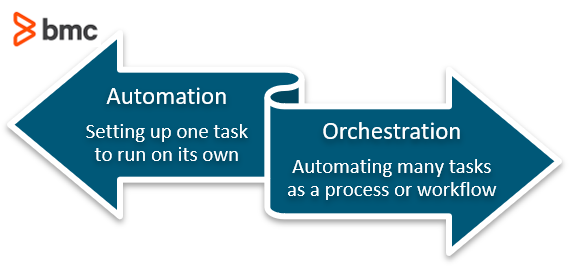
Cloud orchestration involves automating the workflow processes that occur to deliver resources as a service. DevOps orchestration, on the other hand, coordinates the full set of practices and tools an organization uses to build, deploy, operate, and monitor software.
It’s difficult to overstate the importance that automation plays in the successful implementation of DevOps practices. The Software development lifecycle (SDLC) refers to the iterative loop of software development in the software as a service (SaaS) industry. The SDLC generally revolves around six stages: Requirement Analysis, Feasibility Study, Architectural Design, Software Development, Testing, and Deployment.
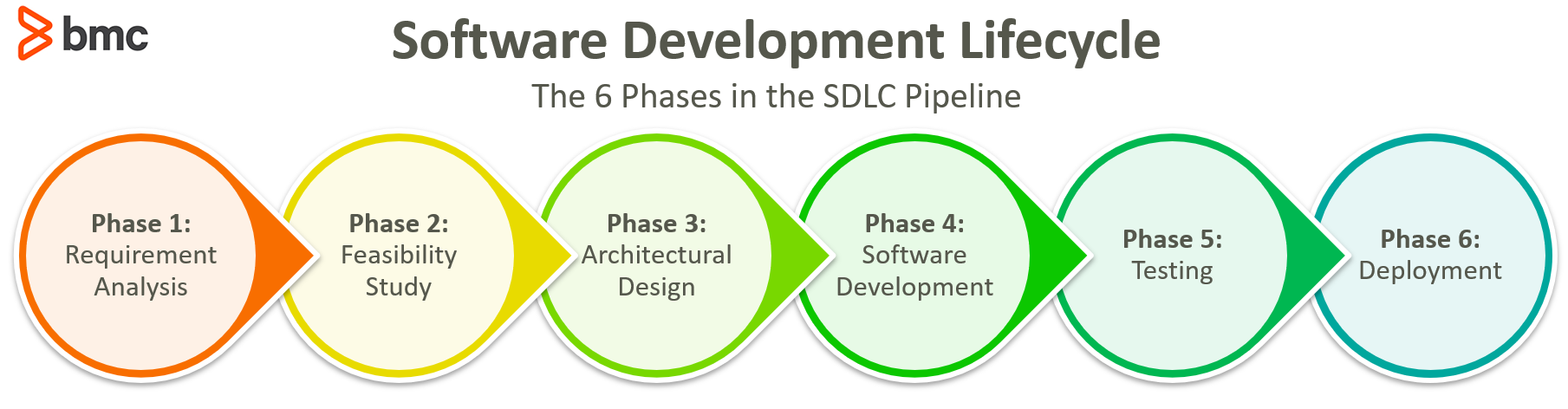
Automation drastically speeds up the SDLC without reducing quality. Orchestrating automated tasks compounds these benefits further:
- Helps maximize the potential (and ROI) of automation tools
- Increases the return on your DevOps investment
How does DevOps orchestration affect the SDLC?
DevOps orchestration affects every phase of the SDLC by coordinating automated tasks—from data center operations and job scheduling to IT process management—into a single, managed system. Not every aspect of development can be automated, but a significant portion can and should be, in pursuit of greater DevOps optimization and overall speed and reliability.
Data centers
Data centers are a prime location to begin automating routine tasks, given how many recurring activities take place there. Servers, networks, and databases all require regular maintenance and security tasks that can be automated to save labor hours while ensuring fewer issues slip through the gaps. Automating data centers can:
- Improve IT efficiency
- Reduce deployment failures
- Offer more manageable complexity across environments
Job scheduling and workload automation
Job scheduling and workload automation can also drastically improve efficiency — and when combined with workflow orchestration in the SDLC, teams gain end-to-end visibility across application delivery and data operations.
- Reduce downtime
- Curb expenses caused by business interruptions
- Enhance scalability by simplifying even the most complex systems
Overwhelming tasks can be broken into smaller, automatable processes that are tackled programmatically—without the need to keep constant tabs on them.
IT processes
Automating IT processes improves collaboration by supporting built-in, audited annotation for clear communication. Automation tools also give organizations the ability to handle Big Data with existing enterprise skills and best practices. The customization available through automation platforms enables orchestration across an organization that works the way it needs to.
These tools also support self-servicing, which allows business users the freedom to manage workloads and submit queries at any time with a user-friendly, web-based mobile interface—no workload automation expert required.
Orchestration compounds the benefits
DevOps orchestration coordinates all of these automated tasks to provide enhanced optimization and oversight. Orchestrating automated IT processes can:
- Accelerate service delivery speeds
- Lower the cost of service delivery
- Increase the reliability of deployments
Orchestration tools customized for an organization’s needs help make the most of automation efforts and DevOps implementation. There is no silver bullet solution, but DevOps is a mentality that encourages a culture of collaboration—supported by a suite of tools that enhance communication across the organization.
How can BMC help with DevOps orchestration?
BMC provides the expertise and tooling to get DevOps orchestration right from the start. BMC expert consultants are available to bring their knowledge and expertise to your organization. In addition to education and consultation, BMC provides custom-tailored Deployment Services to address the unique challenges you face. When partnering with BMC, you get:
- Faster service delivery: Agile releases that keep up with rapid demand
- Visibility across data: Ensure compliance and data accuracy
- Cost-effective service: Increased productivity and performance
- Experienced DevOps professionals: Equip you with the tools you need for success
- Conversion or upgrade: Seamless modernization or total replacement
All tailored for the specific needs of your organization.
Frequently asked questions about DevOps orchestration
What is the difference between DevOps automation and DevOps orchestration?
Automation handles individual tasks—running a script, executing a test, or provisioning a server. DevOps orchestration coordinates multiple automated tasks into a managed workflow, ensuring they run in the right sequence, with the correct dependencies, at the right time. Orchestration is what transforms isolated automation into a coherent, end-to-end process.
Where does orchestration fit in the SDLC?
DevOps orchestration applies across all six phases of the SDLC—from Requirement Analysis and Architectural Design through Software Development, Testing, and Deployment. It ensures each automated activity hands off cleanly to the next, maintaining flow and visibility throughout.
What is the difference between cloud orchestration and DevOps orchestration?
Cloud orchestration specifically automates workflow processes that deliver resources as a service. DevOps orchestration is broader—it coordinates an organization’s entire set of DevOps practices and automation tools across the full software development and delivery lifecycle.
What are the main business benefits of DevOps orchestration?
DevOps orchestration accelerates service delivery, reduces deployment failures, lowers the operational cost of IT, and improves overall reliability. By coordinating automated tasks at scale, it maximizes the return on individual automation investments and amplifies the value of a DevOps culture.
Which areas of IT benefit most from orchestration?
Data centers, job scheduling, workload automation, and IT process management are prime candidates. These areas involve high volumes of recurring, rules-based tasks that are well-suited to automation—and orchestration ensures those tasks work together efficiently rather than in isolation.
Related reading
- BMC DevOps Blog
- State of DevOps: A Report Roundup
- How Workflow Orchestration Improves Application Development and Monitoring
- DevOps for Enterprises
- How & Why To Become a Software Factory
The views and opinions expressed in this post are those of the author and do not necessarily reflect the official position of BMC.
These postings are my own and do not necessarily represent BMC's position, strategies, or opinion.
See an error or have a suggestion? Please let us know by emailing blogs@bmc.com.