Big Data vs. Data Analytics vs. Data Science: What’s the Difference?

Data has become the most critical factor in business today. As a result, different technologies, methodologies, and systems have been invented to process, transform, analyze, and store data in this data-driven world.
However, there is still much confusion regarding the key areas of Big Data, Data Analytics, and Data Science. In this post, we will demystify these concepts to better understand each technology and how they relate to each other.
Each of these technologies complements one another yet can be used as separate entities. For instance, big data can be used to store large sets of data, and data analytics techniques can extract information from simpler datasets.
Read on for more detail.
As the name suggests, big data simply refers to extremely large data sets. This size, combined with the complexity and evolving nature of these data sets, has enabled them to surpass the capabilities of traditional data management tools. This way, data warehouses and data lakes have emerged as the go-to solutions to handle big data, far surpassing the power of traditional databases.
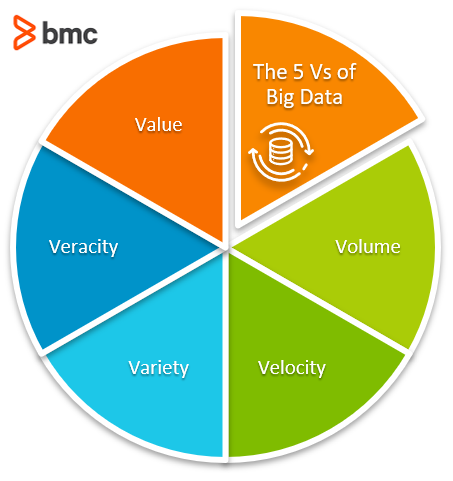
Some data sets that we can consider truly big data include:
(Read our full primer on big data.)
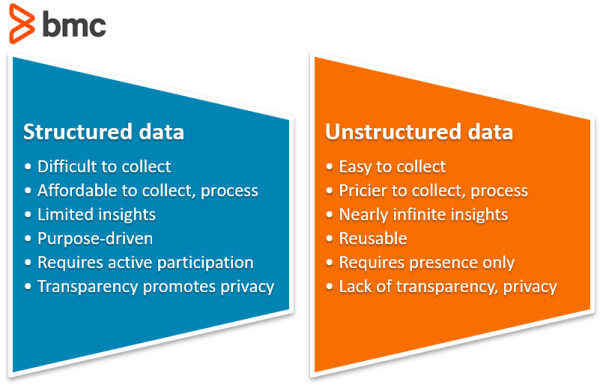
(Get a deeper understanding of structured and unstructured data types.)
When it comes to managing big data, many solutions are available to store and process the data sets. Cloud providers like AWS, Azure, and GCP offer their own data warehousing and data lake implementations, such as:
Apart from that, there are specialized providers such as Snowflake, Databriks, and even open-source solutions like Apache Hadoop, Apache Storm, Openrefine, etc., that provide robust Big Data solutions on any kind of hardware, including commodity hardware.
Data Analytics is the process of analyzing data in order to extract meaningful data from a given data set. These analytics techniques and methods are carried out on big data in most cases, though they certainly can be applied to any data set.
(Learn more about data analysis vs. data analytics)
The primary goal of data analytics is to help individuals or organizations to make informed decisions based on patterns, behaviors, trends, preferences, or any type of meaningful data extracted from a collection of data.
For example, businesses can use analytics to identify their customer preferences, purchase habits, and market trends and then create strategies to address them and handle evolving market conditions. In a scientific sense, a medical research organization can collect data from medical trials and evaluate the effectiveness of drugs or treatments accurately by analyzing those research data.
Combining these analytics with data visualization techniques will help you get a clearer picture of the underlying data and present them more flexibly and purposefully.
While there are multiple analytics methods and techniques for data analytics, there are four types that apply to any data set.
The most important thing to remember is that the accuracy of the analytics is based on the underlying data set. If there are inconsistencies or errors in the dataset, it will result in inefficiencies or outright incorrect analytics.
Any good analytical method will consider external factors like data purity, bias, and variance in the analytical methods. Data Normalization, purifying, and transforming raw data can significantly help in this aspect.
There are both open source and commercial products for data analytics. They will range from simple analytics tools such as Microsoft Excel’s Analysis ToolPak that comes with Microsoft Office to SAP BusinessObjects suite and open source tools such as Apache Spark.
When considering cloud providers, Azure is known as the best platform for data analytics needs. It provides a complete toolset to cater to any need with its Azure Synapse Analytics suite, Apache Spark-based Databricks, HDInsights, Machine Learning, etc.
AWS and GCP also provide tools such as Amazon QuickSight, Amazon Kinesis, GCP Stream Analytics to cater to analytics needs.
Additionally, specialized BI tools provide powerful analytics functionality with relatively simple configurations. Examples here include Microsoft PowerBI, SAS Business Intelligence, and Periscope Data Even programming languages like Python or R can be used to create custom analytics scripts and visualizations for more targeted and advanced analytics needs.
Finally, ML algorithms like TensorFlow and scikit-learn can be considered part of the data analytics toolbox—they are popular tools to use in the analytics process.
Size and scale are not the only things that distinguish big data analytics from ordinary data analytics. Understanding the differences will help you understand big data analytics concepts and the big data that powers it.
Now we have a clear understanding of big data and data analytics. So—what exactly is data science?
Unlike the first two, data science cannot be limited to a single function or field. Data science is a multidisciplinary approach that extracts information from data by combining:
In data analytics, the primary focus is to gain meaningful insights from the underlying data. The scope of Data Science far exceeds this purpose—data science will deal with everything, from analyzing complex data, creating new analytics algorithms and tools for data processing and purification, and even building powerful, useful visualizations.
This includes programming languages like R, Python, Julia, which can be used to create new algorithms, ML models, AI processes for big data platforms like Apache Spark and Apache Hadoop.
Data processing and purification tools such as Winpure, Data Ladder, and data visualization tools such as Microsoft Power Platform, Google Data Studio, Tableau to visualization frameworks like matplotlib and ploty can also be considered as data science tools.
As data science covers everything related to data, any tool or technology that is used in Big Data and Data Analytics can somehow be utilized in the Data Science process.
Big data is the term for large amounts of data that are growing in volume at a rapid rate. The data can be in different forms, such as structured, unstructured, and a blend of both. To process and store it, you need parallel computing capacity and advanced data management tools. Data scientists with big data expertise need to be well-versed in programming NoSQL databases, along with distributed systems and frameworks. Big data analytics is routinely used in financial services, retail, media, entertainment, and communications.
Data analytics is the process of drawing insights from the analysis of raw data, using techniques that range from descriptive to diagnostic, predictive, and prescriptive. While data scientists may be helpful, skilled data analysts with a background in programming, statistics, and mathematics are well able to handle the challenges. Data analytics techniques are used to identify and manage risks, in energy management, and for gaming, healthcare, travel, and science.
Both data analytics and data science are closely related fields that deal with gaining insights, tracking trends, and using past data to make decisions about the future.
Data science is the broader concept, of which data analytics is a part. It also includes data engineering, machine learning, statistics, programming predictive models, and the development and programming of algorithms.
Data analytics is focused on discovering answers and insights to specific questions in order to address the needs of an organization. The work involves preparing specific datasets, performing various types of analyses, finding insights, and presenting the information in ways that are useful for decision makers.
| Aspect | Data Science | Big Data | Data Analytics |
| Definition | The interdisciplinary field that uses scientific methods, processes, algorithms, and systems to extract knowledge and insights from structured and unstructured data. | The collection, storage, and processing of large volumes of diverse data types that exceed traditional processing capabilities. | The process of examining datasets to draw conclusions, identify patterns, and support decision-making. |
| Objective | To derive actionable insights and build predictive models that inform decisions and drive innovation. | To store, manage, and process massive datasets efficiently and reliably, often in real-time or near-real-time. | To provide meaningful insights and support operational or strategic decisions through data examination. |
| Focus | Data exploration, model building, algorithm development, and interpretation of complex data. | Handling the 3Vs (volume, velocity, variety) of data and ensuring scalable and efficient data pipelines. | Analysis and reporting of data to identify trends, measure performance, and inform decisions. |
| Primary Tasks | Data collection, cleaning, exploration, modeling (machine learning), validation, visualization, and communication of insights. | Ingesting, storing, and processing data from diverse sources; ensuring data quality, scalability, and integration. | Descriptive statistics, trend analysis, visualization, and basic predictive insights (often via dashboards and reports). |
| Tools/Technologies | Python, R, Jupyter Notebook, TensorFlow, PyTorch, Scikit-Learn, SQL, Spark (for some ML tasks). | Hadoop, Spark, HDFS, NoSQL databases (e.g., MongoDB, Cassandra), real-time streaming platforms (e.g., Kafka). | SQL, Excel, Tableau, Power BI, Google Data Studio, some scripting in Python/R for lightweight analytics. |
| Data Types | Structured, semi-structured, and unstructured data that has been pre-processed and cleaned for analysis. | Structured, semi-structured, and unstructured data - often raw, massive, and in varied formats (text, images, logs, etc.). | Primarily structured and semi-structured data (often sourced from processed Big Data or data warehouses). |
Ultimately, big data, data analytics, and data science all help individuals and organizations tackle enormous data sets and extract valuable information out of them. As the importance of data grows exponentially, they will become essential components in the technological landscape.