What is workflow orchestration? Enterprise automation at scale
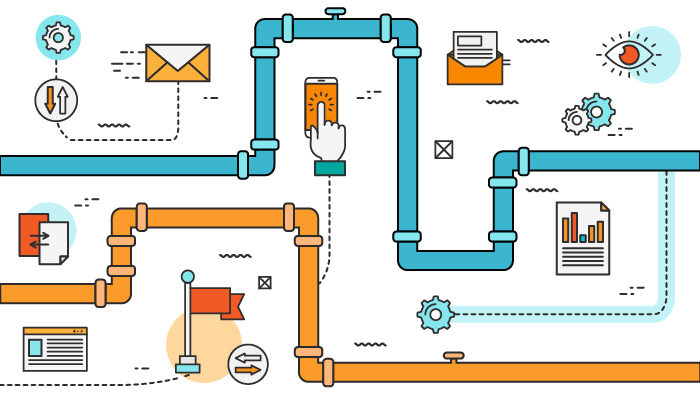
Workflow orchestration coordinates and automates multiple interconnected tasks across diverse systems, applications, and teams to streamline business processes and eliminate manual intervention. In modern enterprises where cloud-based applications integrate with legacy systems through APIs, workflow orchestration transforms complex workflows into automated, scalable operations that deliver measurable business value. By 2029, Gartner projects that 90% of organizations currently delivering workload automation will be using service orchestration and automation platforms to orchestrate workloads and data pipelines in hybrid environments across IT and business domains.*
Modern orchestration platforms act as the operational backbone for digital transformation, managing dependencies between tasks, handling error scenarios, and ensuring end-to-end process completion. Whether orchestrating data pipelines, managing ETL processes, or coordinating microservices, workflow orchestration enables organizations to automate complex processes that would overwhelm manual coordination. These platforms are essential for enterprises managing mission-critical business processes across internally developed applications, commercial off-the-shelf products, and infrastructure deployments.
Workflow orchestration software provides the intelligence layer that coordinates everything from simple task sequences to complex, multi-system workflows spanning cloud, on-premises, and edge locations. This orchestration capability has become fundamental to modern IT and data operations, enabling organizations to manage increasing complexity while maintaining operational efficiency.
Organizations that implement workflow orchestration replace time-consuming manual coordination with automated, repeatable processes—freeing IT teams to focus on innovation rather than routine task management.
Organizations typically run hundreds of thousands of automated jobs monthly across their business workflows, requiring sophisticated coordination capabilities. Without proper workflow management systems, IT teams waste significant time on manual coordination—resources better allocated to innovation and continuous improvement. Workflow orchestration solutions address this challenge by automating task execution, dramatically reducing human error while improving service delivery speed.
The service orchestration and automation platform market reached $3.8 billion in 2024, up from $3.3 billion in 2023, with expectations to grow to $4.9 billion by 2028.* This growth reflects enterprises recognizing orchestration's value in reducing operational overhead while processing workloads faster. Modern orchestration tools are becoming essential components of digital transformation initiatives, enabling organizations to compete effectively in increasingly efficient markets.
As organizations pursue digital transformation, they need solutions that bridge cloud-based and on-premises systems seamlessly. Modern workflow automation unifies these environments, creating integrated workflows that optimize resource usage and scale dynamically with business demands. Leading automation platforms now incorporate generative AI capabilities, with 75% of workflows expected to leverage GenAI to increase troubleshooting efficiency by 50% by 2029.* This AI integration represents a fundamental shift in how orchestration platforms operate, moving from reactive to predictive and even autonomous operations.
Enterprise workflow orchestration also addresses critical compliance and governance requirements. By providing complete audit trails, enforcing security policies, and ensuring consistent execution, orchestration platforms help organizations meet regulatory requirements while maintaining operational agility. This combination of automation, compliance, and scalability makes workflow orchestration indispensable for modern enterprises.
Workflow orchestration is frequently confused with adjacent terms including workflow automation, process orchestration, data orchestration, and job scheduling. Each serves a distinct function; understanding the differences helps organizations select the right tool for the right layer of their operations.
Workflow automation focuses on automating individual tasks—sending notifications, updating databases, or processing transactions. Workflow orchestration coordinates these automated tasks into complex, multi-step workflows, managing dependencies and ensuring end-to-end completion across systems. While automation creates task efficiency, orchestration delivers enterprise scalability through comprehensive workflow management. Orchestration platforms provide the overarching intelligence that determines when, how, and in what sequence automated tasks execute.
Process orchestration manages high-level business processes spanning departments and functions. Workflow orchestration handles technical execution—coordinating APIs, managing data pipelines, and ensuring tasks complete in proper sequence. Both streamline operations but operate at different organizational layers, with workflow orchestration focusing on technical automation workflows. Process orchestration typically involves human decision points and business logic, while workflow orchestration emphasizes system-to-system coordination.
Data orchestration specifically manages data movement through ETL pipelines, data lakes, and processing systems. Workflow orchestration encompasses broader use cases including application workflows, infrastructure automation, and business process coordination beyond data operations alone. Modern orchestration software handles both data and application workflows seamlessly, providing unified control across all automation domains.
Traditional job scheduling focuses on time-based execution of tasks. Workflow orchestration extends far beyond scheduling to include event-driven triggers, conditional logic, dynamic routing, and complex dependency management. While schedulers run jobs at predetermined times, orchestration platforms respond to real-time events and conditions, making intelligent decisions about workflow execution.
Modern workflow orchestration platforms deliver enterprise automation through six core capabilities spanning the entire technology stack: dependency management, intelligent error handling, real-time monitoring, low-code development, universal integration, and event-driven architecture.
Enterprise platforms like Control-M and other commercial orchestration solutions manage complex dependencies between tasks, ensuring proper execution order while optimizing resource utilization. Using declarative workflows, data engineering teams define intricate pipelines processing big data workloads efficiently. Advanced scheduling capabilities include support for multiple time zones, blackout windows, fiscal calendars, and complex recurrence patterns that align with business operations.
When failures occur, orchestration platforms implement sophisticated retry mechanisms, compensating transactions, and stakeholder alerting. This ensures workflow stability by detecting errors, triggering recovery actions such as retries or rollbacks, and minimizing disruptions while maintaining reliability and data integrity. Modern platforms use machine learning to predict potential failures before they occur, enabling proactive remediation.
Modern automation platforms provide comprehensive dashboards offering complete visibility into workflow execution. Teams monitor performance metrics, identify bottlenecks proactively, and ensure SLA compliance through predictive analytics and workflow monitoring. Advanced observability features include distributed tracing, log aggregation, and correlation analysis across multiple systems.
Workflow design includes visual workflow designers, code-based designers, and libraries to create and reuse workflow templates, supporting version control and collaboration. These capabilities democratize automation, empowering business users to create workflows without extensive programming knowledge. Visual designers support drag-and-drop functionality while maintaining the flexibility for code-based customization when needed.
Broad integration capabilities span software and infrastructure technology landscapes from cloud to edge applications. Pre-built connectors for major platforms enable seamless integration across hybrid environments and multi-cloud architectures. Modern orchestration platforms support REST APIs, GraphQL, webhook endpoints, and traditional protocols like FTP and database connections.
Contemporary orchestration platforms support event-driven workflows that respond to real-time triggers from various sources. This includes file watchers, message queues, webhooks, database changes, and custom event sources. Event-driven orchestration enables reactive workflows that respond immediately to business conditions rather than waiting for scheduled execution times.
Successful workflow orchestration implementation follows a phased approach: assess current state, select a platform, design architecture, integrate progressively, monitor and optimize, then scale across the organization.
Identify workflows consuming significant resources that would benefit from workflow automation—particularly data pipelines, ETL processes, or customer-facing workflows requiring high reliability. Document existing business processes and automation opportunities. Conduct a thorough analysis of current pain points, manual handoffs, and error-prone processes. Evaluate the technical debt associated with existing automation scripts and scheduled jobs that could be consolidated into an orchestration platform.
Choose between open-source solutions like Apache Airflow or enterprise orchestration platforms based on scalability requirements, support needs, and existing technology investments. Consider cloud-native capabilities and hybrid cloud support. Evaluate platforms based on integration capabilities, ease of use, scalability, support model, and total cost of ownership. Factor in the skills available within your organization and the learning curve associated with different platforms.
Map dependencies comprehensively, define error handling procedures, establish notification rules, and implement governance frameworks ensuring compliance. Create workflow templates for common patterns. Design modular, reusable components that can be combined into larger workflows. Establish naming conventions, documentation standards, and change management processes for workflow development.
Connect applications, databases, and APIs using native connectors or custom integrations, starting with high-impact workflows before expanding scope. Leverage microservices architectures where appropriate. Begin with read-only integrations to minimize risk, then progress to workflows that modify data. Implement proper authentication, authorization, and encryption for all integrations.
Validate workflows and data thoroughly, monitor performance continuously, and optimize based on observability data and user feedback. Establish KPIs for workflow performance. Create comprehensive test suites including unit tests, integration tests, and end-to-end workflow validation. Implement performance baselines and alert thresholds for critical workflows.
Gradually extend orchestration to additional business processes, leveraging lessons learned to accelerate subsequent implementations. Build automation frameworks for enterprise-wide adoption. Create centers of excellence to share best practices and provide guidance to teams adopting orchestration. Develop governance models that balance autonomy with standardization.
Workflow orchestration delivers measurable value across seven dimensions: scalability, error reduction, real-time processing, operational excellence, business agility, cost optimization, and governance.
Unprecedented scalability: Handle exponentially increasing workloads without proportional resource growth. Cloud-based orchestration platforms automatically scale to meet demand while optimizing infrastructure costs through intelligent resource allocation and auto-scaling capabilities. Organizations report processing workload volumes that would be impossible to manage manually, with some executing millions of jobs monthly.
Error reduction and consistency: Automated workflows eliminate human error inherent in manual processes. Standardized execution ensures consistency across all business processes, improving quality and compliance through workflow standardization. Orchestration platforms enforce best practices, validate inputs, and ensure outputs meet quality standards before proceeding to subsequent steps.
Real-time processing capabilities: Process data pipelines and business workflows in real-time, enabling immediate response to customer needs and market changes. Stream processing integration supports event-driven architectures and real-time automation. Modern orchestration enables sub-second response times for critical workflows, supporting use cases like fraud detection and real-time personalization.
Operational excellence: Organizations report executing hundreds of thousands of workflows monthly that would be impossible to manage manually, dramatically reducing operational overhead while improving reliability through intelligent automation. Orchestration platforms provide centralized control, reducing the complexity of managing distributed systems.
Enhanced business agility: Rapid workflow modification enables quick adaptation to changing business requirements. Low-code interfaces empower business users to modify processes without IT bottlenecks, supporting digital transformation initiatives. Changes that once required weeks of development can now be implemented in hours or days.
Cost optimization: Reduce infrastructure costs through efficient resource utilization, minimize manual labor requirements, and prevent costly errors and downtime through proactive monitoring and predictive analytics. Organizations typically see ROI within months of implementing orchestration platforms through reduced operational costs and improved efficiency.
Improved compliance and governance: Orchestration platforms provide complete audit trails, enforce security policies, and ensure regulatory compliance through automated controls. Built-in governance features include role-based access control, approval workflows, and compliance reporting capabilities.
Workflow orchestration is delivered through four main platform categories—enterprise orchestration platforms, open-source solutions, cloud-native services, and container orchestration tools—each suited to different organizational requirements and technical environments.
Enterprise orchestration platforms: Enterprise-grade workflow orchestration platforms provide comprehensive solutions spanning entire IT landscapes from mainframes to multicloud and cloud-native environments. Control-M, a recognized leader in this space, delivers enterprise-grade reliability, advanced scheduling, workflow optimization, and end-to-end visibility for complex hybrid environments.* This automation solution offers mission-critical reliability with advanced error handling, compliance features, and support for complex hybrid infrastructures. Enterprise platforms typically include high availability, disaster recovery, and enterprise-grade security controls.
Open-source solutions: Apache Airflow leads open-source adoption for data engineering teams orchestrating ETL pipelines and managing big data workloads. Its Python-based framework offers extensive customization and community support for workflow development. Other open-source options include Luigi, Prefect, and Dagster, each offering unique capabilities for specific use cases.
Cloud-native services: Microsoft Azure Logic Apps, AWS Step Functions, and Google Cloud Composer provide managed orchestration services that scale automatically. These platforms offer low-code development with pre-built connectors for seamless cloud ecosystem integration. Cloud-native services eliminate infrastructure management overhead while providing enterprise-grade reliability.
Container orchestration: Kubernetes has become the de facto standard for container orchestration, managing containerized workloads across clusters. While primarily focused on container management, Kubernetes increasingly supports workflow orchestration through operators and custom resources. Tools like Argo Workflows extend Kubernetes with native workflow capabilities.
Core orchestration technologies include:
Successful workflow orchestration programs share eight practices: targeting high-impact use cases first, building comprehensive error handling, enabling continuous improvement, using low-code strategically, versioning all workflows, designing for scale, establishing governance, and documenting thoroughly.
Start with high-impact use cases: Target workflows running frequently that consume significant resources. Common starting points include ETL pipelines, supply chain processes, and customer experience workflows demonstrating immediate ROI through process automation. Focus on workflows with clear success metrics and stakeholder buy-in.
Implement comprehensive error handling: Design workflows with retry logic, fallback procedures, and stakeholder notifications. Anticipate failure scenarios and build resilience into every automated workflow from inception. Create runbooks for common failure scenarios and implement automated remediation where possible.
Enable continuous improvement: Use observability data to optimize workflows continuously. Monitor execution metrics, identify bottlenecks systematically, and refine processes based on performance data and workflow analytics. Establish regular review cycles to assess workflow performance and identify optimization opportunities.
Adopt low-code where strategic: Empower business users with low-code tools while maintaining governance standards. This accelerates development while ensuring compliance and security in citizen development initiatives. Create guardrails that prevent unauthorized access while enabling innovation.
Version control everything: Treat workflows as code, maintaining complete version history and enabling rollback capabilities. This ensures stability while supporting continuous improvement and DevOps practices. Implement branching strategies that support parallel development and safe production deployments.
Plan for scale from day one: Design workflows to handle significant volume increases. Build in capacity for growth without requiring architectural changes, supporting elastic scalability. Consider peak load scenarios and design workflows that can handle burst traffic gracefully.
Establish governance frameworks: Create clear policies for workflow development, testing, deployment, and maintenance. Define roles and responsibilities, establish approval processes, and implement security controls. Regular audits ensure compliance with governance standards.
Document comprehensively: Maintain detailed documentation for all workflows, including business logic, technical implementation, dependencies, and troubleshooting guides. Good documentation accelerates onboarding and reduces support burden.
Workflow orchestration is deployed across industries for use cases ranging from financial transaction processing and retail supply chain management to healthcare coordination and manufacturing automation.
Financial services data processing: Major banks use enterprise orchestration platforms to process millions of daily transactions through complex data pipelines. These workflows extract data from core banking systems, transform it for regulatory compliance, and load it into analytics platforms supporting AI models and risk assessment. Orchestration ensures transaction integrity while meeting strict regulatory requirements for data lineage and audit trails.
Retail supply chain optimization: E-commerce organizations orchestrate inventory management, logistics coordination, and supplier workflows in real-time. Automated orchestration reduces stockouts while optimizing inventory costs through predictive analytics integration and supply chain automation. Workflows coordinate everything from demand forecasting to last-mile delivery, ensuring seamless customer experiences.
Healthcare clinical workflows: Healthcare systems orchestrate patient data across EHR systems, laboratory information systems, and billing platforms. Real-time coordination improves patient outcomes while ensuring HIPAA compliance through automated audit trails and healthcare automation. Orchestration platforms manage complex workflows like patient admissions, lab result processing, and insurance verification.
Manufacturing production automation: Manufacturers orchestrate production workflows spanning IoT sensors, MES systems, and ERP platforms. Real-time coordination optimizes production schedules, reduces downtime, and enables predictive maintenance through industrial automation. Workflows coordinate everything from raw material procurement to quality control and shipping.
Technology platform operations: SaaS providers orchestrate customer onboarding, provisioning, and billing workflows across multiple systems. Orchestration reduces onboarding time significantly while ensuring consistent service delivery through SaaS automation. Complex workflows manage trial conversions, feature provisioning, and usage-based billing.
Media and entertainment content processing: Media companies orchestrate content ingestion, transcoding, quality control, and distribution workflows. Orchestration platforms manage complex media pipelines that process thousands of assets daily, ensuring content reaches multiple platforms in appropriate formats while maintaining quality standards.
The future of workflow orchestration is shaped by AI integration, edge computing, and no-code interfaces—trends that are shifting orchestration from reactive systems to predictive, self-optimizing platforms.
AI and machine learning integration will enable predictive orchestration that anticipates and prevents failures before they occur. Autonomous orchestration platforms will self-optimize based on performance metrics and business outcomes.
Edge orchestration is becoming increasingly important as organizations deploy workflows closer to data sources. This reduces latency and enables real-time processing for IoT and other edge computing scenarios. Hybrid orchestration spanning cloud, on-premises, and edge environments will become the standard.
Low-code and no-code platforms will continue democratizing orchestration, enabling business users to create sophisticated workflows without advanced technical expertise. Natural language interfaces powered by generative AI will allow users to describe desired workflows in plain language.
Organizations ready to implement workflow orchestration should begin by assessing current processes to identify automation opportunities with clear ROI. Look for workflows with defined dependencies, repetitive tasks, and high business impact. Consider that service orchestration platforms now encompass solutions empowering organizations to manage their entire technology stack, including workloads, workflows, resource provisioning, and data pipelines.
Start with a pilot project demonstrating value quickly—perhaps automating a critical data pipeline or streamlining a customer-facing process. Use lessons learned to expand workflow orchestration systematically across your organization, building expertise while delivering continuous improvement. Partner with experienced providers offering migration services and best practices, accelerating your automation journey.
Establish success metrics early and track them consistently. Common metrics include reduction in manual effort, improved processing speed, error rate reduction, and cost savings. Regular reviews ensure orchestration initiatives align with business objectives and deliver expected value.
Modern workflow orchestration solutions transform how organizations operate, compete, and innovate. By automating complex workflows, eliminating manual intervention, and providing real-time visibility, workflow orchestration enables businesses to scale efficiently while improving customer experience and operational excellence. The market's rapid growth and evolution toward AI-powered capabilities signal orchestration's critical role in enterprise digital transformation strategies.
Ready to transform your enterprise operations? Explore how modern workflow orchestration can streamline your complex processes and deliver the scalability your organization demands for future growth.
What is the difference between workflow orchestration and workflow automation?
Workflow automation handles individual tasks in isolation—such as sending a notification or updating a database record. Workflow orchestration coordinates multiple automated tasks across systems, managing dependencies, execution sequence, and error handling to ensure end-to-end process completion. Orchestration provides the intelligence layer that determines when and how individual automated tasks execute within larger, multi-system workflows.
What is an example of workflow orchestration in practice?
A financial services firm uses workflow orchestration to process end-of-day transactions: the orchestration platform extracts data from core banking systems, triggers transformation jobs when extraction completes, validates output quality, loads results into the analytics platform, and alerts the operations team only if error thresholds are exceeded. Each step depends on the previous one completing successfully—a dependency chain that workflow orchestration manages automatically, without manual intervention.
What is the best workflow orchestration tool for enterprise use?
The right orchestration platform depends on scale, hybrid infrastructure requirements, and support needs. Enterprise platforms like Control-M are designed for mission-critical environments spanning mainframe to multicloud. Open-source tools like Apache Airflow suit data engineering teams with Python expertise. Cloud-native services like AWS Step Functions and Azure Logic Apps work well for organizations standardized on those cloud providers. Evaluate platforms on integration breadth, scalability, low-code capabilities, and total cost of ownership before selecting.
How does workflow orchestration support compliance and governance?
Workflow orchestration platforms enforce compliance by providing complete, immutable audit trails of every task execution, enforcing role-based access controls, and ensuring workflows execute according to documented procedures. Built-in approval workflows, compliance reporting, and security policy enforcement make orchestration platforms a key component of regulatory programs in financial services, healthcare, and manufacturing environments.
How is AI changing workflow orchestration?
Generative AI and machine learning are shifting workflow orchestration from reactive to predictive. AI-powered capabilities enable platforms to anticipate failures before they occur, suggest workflow optimizations based on performance data, and allow users to create workflows using natural language instructions. Gartner projects that 75% of workflows will leverage GenAI to increase troubleshooting efficiency by 50% by 2029.*
Source: Gartner, "Magic Quadrant for Service Orchestration and Automation Platforms," August 2025.
The views and opinions expressed in this post are those of the author and do not necessarily reflect the official position of BMC.